

Does a root canal hurt? What to expect, step by step
“Root canal” is a phrase that makes many people nervous. Much of that worry comes from what people have heard, not from what the treatment involves today. This article walks through what usually happens, how your mouth is kept comfortable, and what the days afterwards tend to feel like, so you can go into the appointment knowing what to expect.
Why would I need a root canal?
Inside each tooth is soft tissue called the pulp, which holds nerves and blood vessels. When bacteria reach the pulp through deep decay, a crack or a leaking filling, or when a tooth has been injured, the pulp can become inflamed or infected.
Signs that can point to this include tooth pain when you chew or bite, sensitivity to hot or cold that lingers, swollen gums near a tooth, or a cracked or chipped tooth. Some teeth give few warning signs at all, and the problem is found on an X-ray at a checkup.
Root canal treatment removes the damaged pulp, cleans and seals the inside of the tooth, and allows you to keep your natural tooth rather than having it taken out. You can read more on our root canal therapy page.
Does a root canal hurt?
The honest answer is that most patients find the treatment itself feels much like having a filling. Before any work begins, the tooth and surrounding area are numbed with local anaesthetic, often called freezing. Your dentist checks that the area is numb before starting, and you can raise a hand at any point if you feel discomfort so more freezing can be given.
It is common to feel pressure or vibration during treatment. That is normal, and it is different from sharp pain.
Often the pain people associate with a root canal is actually the pain of the infected tooth beforehand. Treating the tooth is aimed at relieving that pain, not causing it.
If dental visits make you anxious, tell us when you book. Some patients prefer to talk through each step as it happens, and some prefer a signal to ask for a break. Our office also offers sedation dentistry, and your dentist can discuss whether it suits your appointment.
What are the steps of a root canal?
The exact steps depend on the tooth, but a typical appointment looks like this:
- Assessment. Your dentist examines the tooth and reviews an X-ray to see the shape of the roots and the extent of the problem.
- Freezing. Local anaesthetic is used to numb the tooth and the gum around it.
- Isolating the tooth. A thin sheet, called a rubber dam, is placed around the tooth. It keeps the tooth clean and dry and stops small instruments or rinse water from going into your mouth.
- Opening the tooth. A small opening is made through the chewing surface of the tooth to reach the pulp.
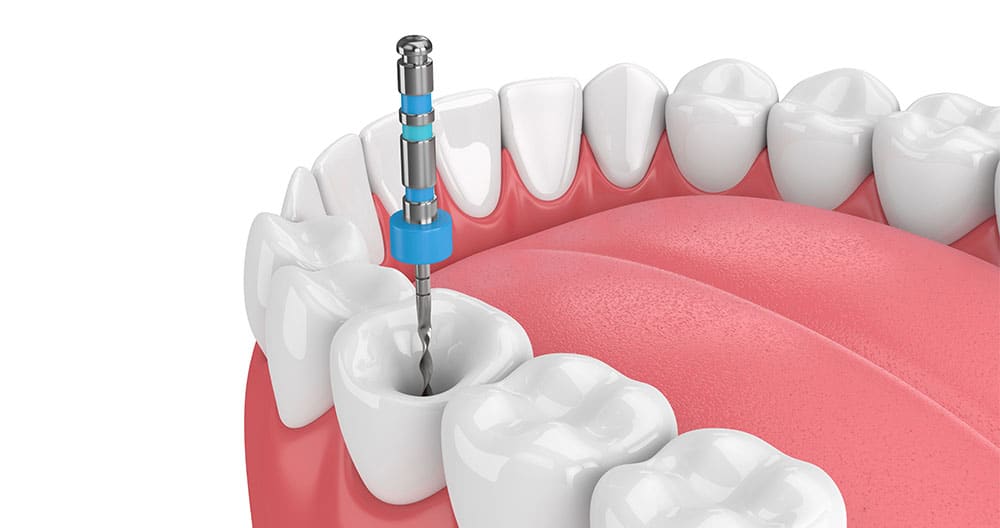
- Cleaning and shaping. Fine instruments remove the damaged pulp and clean and shape the narrow canals inside each root. The canals are rinsed to disinfect them.
- Filling and sealing. The cleaned canals are filled with a rubber-like material and sealed.
- Closing the tooth. The opening is closed with a temporary or final filling. Most teeth then need a final restoration, often a crown, at a later visit.
How long does a root canal take?
Many root canals are completed in one appointment, and some need two. A second visit may be needed when there is a lot of infection, when the tooth has several canals, or when the canals are curved or narrow.
Back teeth such as molars can have three or more canals, so they generally take longer than front teeth. Your dentist can estimate the time needed once the tooth has been assessed.
Some cases are more complex than others. We will refer you when a specialist’s care is needed.
How will I feel after a root canal?
The freezing usually wears off within a few hours. Until it does, avoid eating so you do not bite your cheek, lip or tongue by accident.
Once it wears off, it is common for the tooth and gum to feel tender for a few days, and sometimes for a week or two, especially when you bite down. Your jaw may also feel a little stiff from holding your mouth open. For most people this eases steadily day by day. Your dentist will let you know what kind of over-the-counter pain relief, if any, is suitable for you.
How should I care for the tooth afterwards?
A few simple steps help the tooth settle:
- Wait until the freezing has worn off before eating or having hot drinks.
- Chew on the other side of your mouth until the tooth has its final restoration.
- Avoid hard, crunchy or sticky foods on that tooth, especially while a temporary filling is in place.
- Keep brushing and flossing as normal, gently around the treated tooth.
- Keep the follow-up appointment for your crown or final filling.
When should I call the office?
Some tenderness is expected. Please call us if you notice any of the following:
- Pain or pressure that is severe, or that lasts more than a few days
- Swelling inside your mouth or on your face
- A rash, hives or itching after taking a medication
- Your bite feels uneven or high on that tooth
- The temporary filling comes out (losing a thin layer of it is normal)
- The symptoms you had before treatment come back
If you have swelling that affects your breathing or swallowing, or swelling with a fever, seek emergency medical care right away.
Why is a crown often recommended after a root canal?
A tooth that needs a root canal has often already lost a lot of its structure to decay, a crack or a large filling. The treatment itself also involves an opening through the chewing surface. Together, this can leave the tooth weaker and more likely to crack under chewing pressure.
A crown covers and protects the tooth. It is especially common for back teeth, which take most of the force when you chew. Some front teeth can be restored with a filling instead, and your dentist will explain which option fits your tooth. You can learn more about dental crowns.
Try not to put off the final restoration. A tooth left with only a temporary filling for a long time is more likely to break or become reinfected.
Frequently asked questions
Is it better to just pull the tooth?
Keeping your natural tooth is usually preferred where it can be saved, because a missing tooth can affect chewing and allow neighbouring teeth to shift. In some cases the tooth cannot be saved, and your dentist will explain the options, including extraction and ways to replace the tooth.
Can I go to work or school after a root canal?
Many people return to their usual activities the same day or the next day. If you have sedation, follow the aftercare instructions your dentist gives you, which may include arranging a ride home.
Does a tooth still feel anything after a root canal?
The nerve inside the tooth is removed, but the tissues around the root still sense pressure. That is why the tooth can feel tender when you bite in the first few days.
Talk to us about a tooth that is bothering you
If a tooth is sore, sensitive or swollen, it is worth having it checked sooner rather than later. Call Barrie Heights Family Dentistry at (705) 730-0721, or request an appointment online. You can also read more about root canal treatment at our Barrie office.