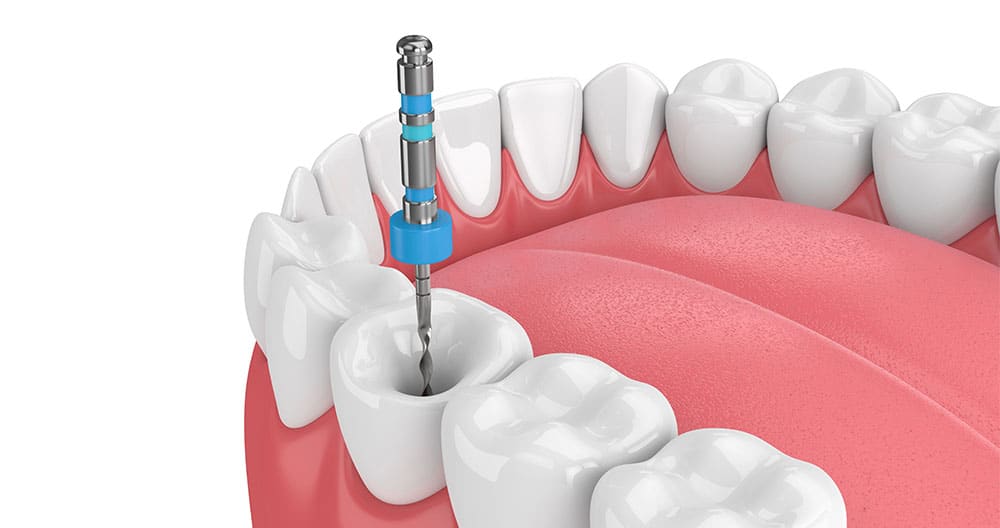

A root canal can sound worrying, but it is one of the most common ways a dentist saves a natural tooth. At Barrie Heights Family Dentistry, Dr. Rebeca Riojas-Ozturk provides root canal therapy as part of general family dentistry.
This page answers the questions patients ask us most: what the treatment is, how to tell whether you might need one, what happens in the chair, and what comes afterwards.
What is a root canal?
Inside every tooth, under the hard outer layers, is a soft core called the pulp. It holds the tooth’s nerve, blood vessels and connective tissue, and it runs down through narrow channels in the roots called canals.
When the pulp becomes inflamed or infected, it cannot heal on its own. Root canal treatment removes the damaged pulp, cleans and disinfects the canals, and then fills and seals them. The outer tooth stays in place, so you keep your own tooth for chewing and for holding neighbouring teeth in position.
What causes the pulp to become infected?
The most common cause is deep decay from a cavity that was not treated early. Bacteria work their way through the enamel and the layer beneath it until they reach the pulp.
Other causes include a crack or chip that lets bacteria in, a large or repeated filling on the same tooth, and a knock to the mouth. After an injury, the pulp can be damaged even when the tooth looks normal from the outside.
What are the signs you may need a root canal?
Some signs point towards a problem in the pulp. Any of these is a reason to book an exam:
- Tooth pain that does not settle, or pain when you chew or bite down
- Sensitivity to hot or cold that lingers after the food or drink is gone
- Swollen or tender gums near one tooth
- A small bump on the gum, sometimes with a bad taste
- A tooth that has darkened in colour
- A tooth that is cracked or chipped, or that has deep decay
Not every sore tooth needs a root canal, and some infected teeth cause no pain at all. Sometimes the first sign is a change on an X-ray taken at a routine checkup. That is one reason regular visits matter.
How does your dentist decide whether you need one?
Your dentist will ask about your symptoms, examine the tooth and the gum around it, and take X-rays to look at the roots and the bone. Simple tests, such as checking how the tooth responds to cold or to gentle tapping, help show whether the pulp is healthy.
Once there is a clear picture, your dentist will explain the options, including what could happen if the tooth is left untreated. You can ask as many questions as you need before deciding.
What happens during a root canal, step by step?
Every tooth is different, but a typical appointment follows these steps:
- Freezing. Your dentist numbs the tooth and the surrounding area with local anaesthetic, and checks that it is working before starting.
- Keeping the tooth clean and dry. A thin sheet, often called a dental dam, is placed around the tooth. It keeps saliva out and stops small pieces from falling into your mouth.
- Opening the tooth. A small opening is made through the biting surface, or the back of a front tooth, to reach the pulp chamber.
- Cleaning the canals. The damaged pulp is removed, and each canal is carefully cleaned, shaped and rinsed with disinfecting solutions.
- Filling and sealing. The canals are filled with a rubber-like material and sealed to help keep bacteria out.
- Closing the tooth. A filling, sometimes a temporary one, is placed over the opening.
Some root canals are completed in one visit. Others need two or more, for example when there is a lot of infection or the canals are hard to reach. Your dentist will tell you what to plan for.
Does a root canal hurt?
The treatment is done with the tooth frozen, so most patients feel pressure and vibration rather than sharp pain. In many cases the tooth was already painful because of the infection, and treatment is what relieves it.
It is normal for the tooth and gum to feel tender for a few days afterwards. If you feel anxious about dental work, tell us when you book. We can explain each step as we go, agree on a signal for a break, and talk about sedation options if they suit you.
For a fuller walk-through of what patients feel during and after treatment, read our article “Does a root canal hurt? What to expect, step by step“.
What should you expect after a root canal?
Most people return to their usual routine the same day or the next day. The freezing wears off over a few hours, so take care not to bite your cheek or tongue, and avoid hot drinks until feeling returns.
In the days that follow:
- Avoid chewing hard or sticky food on the treated tooth until it has its final restoration
- Keep brushing and flossing normally, gently around the treated area
- Expect some tenderness, which usually eases within a few days
- Ask your dentist which over-the-counter pain relief is suitable for you
Call the office if you have swelling that gets worse, pain that increases rather than eases, a reaction to any medication, or if your bite feels uneven. If a temporary filling comes out, call us so it can be replaced.
Why is a crown often needed after a root canal?
A tooth that needs a root canal has often lost a lot of its structure to decay, cracks or earlier fillings. Once the pulp is removed, the tooth can also become more brittle over time, especially back teeth that take the force of chewing.
A crown covers and protects the tooth and helps reduce the risk of it breaking. Not every tooth needs one. Front teeth with plenty of healthy structure left can sometimes be restored with a filling. Your dentist will explain which option suits your tooth and why.
What are the alternatives to a root canal?
The main alternative is to remove the tooth. An extraction deals with the infection, but it leaves a gap. Nearby teeth can drift into the space over time, and chewing on that side may become harder.
If a tooth is removed, it can be replaced with a bridge, an implant restoration or a denture. Each of these involves its own treatment and cost. Where a tooth can be saved, many patients prefer to keep it, but the choice is yours, and your dentist will talk through the benefits and trade-offs of each option.
Leaving an infected tooth untreated is not a real alternative. The infection can spread to the bone and surrounding tissues even if the pain stops for a while.
How much does a root canal cost?
We will explain costs and coverage before treatment.
Will I be referred elsewhere?
Most root canals can be completed at our Barrie office. Some teeth have very curved, narrow or blocked canals, or have had root canal treatment before. In those cases, we will refer you when a specialist’s care is needed, and we will explain why.
How do I book an appointment?
If you have tooth pain or any of the signs above, call Barrie Heights Family Dentistry at (705) 730-0721, or send a request through our appointment request page. We are at 352 Yonge St, Barrie. If you have swelling that spreads to your face or neck, difficulty breathing or swallowing, or a high fever, go to the nearest hospital emergency department.
Frequently asked questions
How long does a root canal take?
A single appointment often takes about one to two hours, depending on the tooth and how many canals it has. Some teeth need a second visit. Your dentist will tell you what to expect before starting.
Can I go back to work after a root canal?
Most people can return to work or school the same day or the next day. The freezing takes a few hours to wear off, and the tooth may feel tender for a few days.
If the pain goes away, do I still need treatment?
Yes, it is still important to have the tooth checked. Pain can stop when the nerve inside the tooth dies, but the infection can remain and spread. Your dentist can confirm what is happening with an exam and X-rays.
Does every tooth need a crown after a root canal?
No. Back teeth usually benefit from a crown because they take the force of chewing. A front tooth with plenty of healthy structure can sometimes be restored with a filling instead.
Is it better to pull the tooth instead?
It depends on the tooth. Keeping a natural tooth avoids a gap and the need to replace it later, but removal is sometimes the right choice. Your dentist will explain the options so you can decide.
Can a tooth with a root canal get infected again?
It can happen, although many treated teeth last for years. Good brushing and flossing, a well-fitting restoration and regular checkups all help. If problems return, your dentist will discuss the next steps.