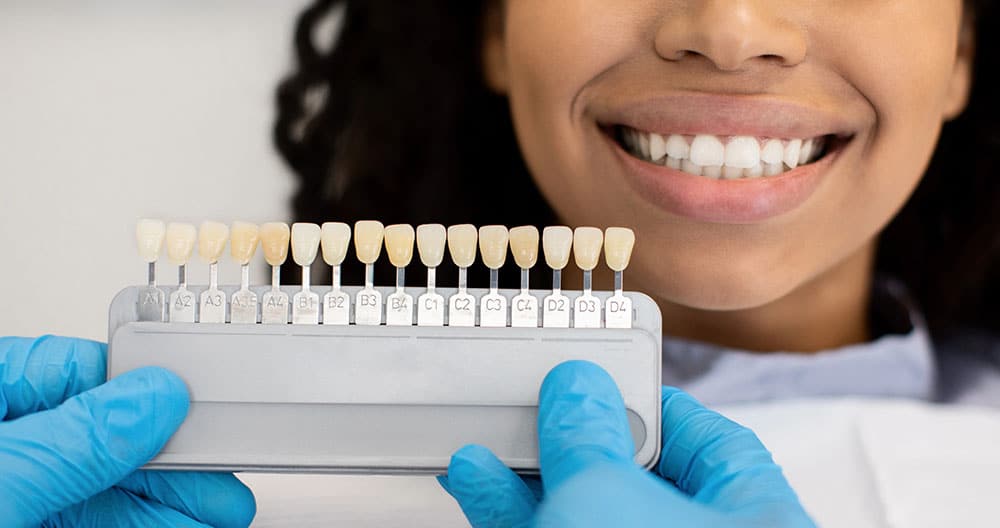

Coffee, tea, red wine, smoking and ordinary wear all leave their mark on teeth over the years. Professional whitening can lighten that staining and brighten the colour of your natural teeth.
At Barrie Heights Family Dentistry, Dr. Rebeca Riojas-Ozturk offers whitening in the office and with custom take-home trays. This page explains how each works, who whitening suits, and what to expect afterwards, so you can decide whether it is right for you.
How does professional teeth whitening work?
Whitening uses a bleaching gel that passes into the outer layers of the tooth and breaks down the stains held there. It changes the colour of the tooth itself, which is different from a polish or a whitening toothpaste that mainly removes stains from the surface.
Professional whitening is planned and supervised by your dentist. The strength of the gel, how long it stays on and how often it is used are matched to your teeth, and your gums are protected during treatment.
What whitening options are offered at the Barrie office?
There are two ways to whiten your teeth with us.
In-office whitening
In-office whitening is done in the dental chair. Your gums and lips are protected, the whitening gel is applied to the front surfaces of your teeth, and it is left on for a set time before being removed. The main advantage is speed: most of the change happens in a single visit.
Take-home whitening trays
With take-home whitening, we make thin trays shaped to fit your teeth. You wear them at home with a whitening gel for a set time each day or night, following your dentist’s instructions. The change is gradual, over a period of days to weeks. Because the trays are custom-made, the gel stays where it should, and you can keep the trays for touch-ups later.
In-office or take-home: how do you choose?
Both approaches can work well. The better fit depends on your teeth and your routine.
In-office whitening may suit you if you want a noticeable change before a particular date, or if you would rather not wear trays at home. Take-home trays may suit you if you prefer to whiten gradually, want more control over the pace, or plan to refresh your results from time to time.
Some patients combine the two, starting in the chair and then using trays to maintain the colour. Your dentist will talk through the options at your consultation and recommend what suits your teeth.
Why do you need a checkup before whitening?
Whitening gel should only go on healthy teeth and gums. Before any whitening, your dentist will check for:
- Cavities and worn or leaking fillings. Gel reaching the inside of a tooth through decay can cause pain.
- Gum disease and receding gums. Exposed roots do not whiten the way enamel does, and they can become sensitive.
- The cause of the discolouration. A single tooth that has turned darker than its neighbours can be a sign of a problem inside the tooth, such as damage after an injury. That needs to be looked at first, and it may need treatment such as root canal therapy.
A professional cleaning before whitening removes surface stains and tartar, so the gel can work evenly. If it is time for your cleaning, it makes sense to book it first. See our hygiene services.
Who is a good candidate for teeth whitening?
Whitening generally works well for adults with healthy teeth and gums whose teeth have become yellowed or stained over time from food, drink, smoking or age.
It may be less suitable, or may need a different plan, if:
- Your teeth are grey or banded in colour, which can be linked to certain medications taken while teeth were forming or to how the teeth developed
- You have untreated decay or gum disease
- Your teeth are already very sensitive
- You are pregnant or breastfeeding, in which case your dentist may suggest waiting
- Your visible front teeth have crowns, veneers or large fillings (see below)
For teenagers, your dentist can advise whether whitening is appropriate. If whitening is unlikely to give you the result you want, your dentist can explain other options, such as porcelain veneers or bonding, which are covered on our cosmetic dentistry page.
Do crowns, fillings and veneers whiten?
No. Whitening gel works on natural tooth structure. Crowns, veneers, bridges and tooth-coloured fillings keep the colour they were made in.
This matters if you have any of these on your front teeth. After whitening, your natural teeth may be lighter than the restorations next to them, and the difference can be noticeable when you smile.
If you are planning new crowns, veneers or fillings on visible teeth, it often makes sense to whiten first. The new work can then be matched to your lighter shade. If an existing restoration no longer matches after whitening, your dentist can discuss whether replacing it is worthwhile.
Will whitening make your teeth sensitive?
Some people notice sensitivity during or shortly after whitening, often as a short, sharp twinge with cold drinks or cold air. Some also notice mild irritation of the gums. For most people this is temporary and settles once treatment stops.
If you already have sensitive teeth, tell your dentist before starting. Options include a gentler gel, shorter wear times, spacing out treatments, or using a toothpaste for sensitive teeth before and during whitening. If sensitivity becomes uncomfortable with take-home trays, stop and call us for advice.
How long do whitening results last?
Results vary from person to person. For many people, the change lasts from several months to a few years. How long it lasts depends on your natural tooth colour, how your teeth respond to the gel, and your habits.
Coffee, tea, red wine, dark sauces and smoking all bring staining back sooner. Rinsing with water after dark drinks, brushing twice a day and keeping up regular cleanings can help your teeth stay brighter for longer. If you have take-home trays, occasional touch-ups can refresh the colour, following your dentist’s guidance.
Is whitening from the store the same thing?
Store-bought strips and kits use the same general idea, but they are not made to fit your teeth and are used without a dental exam first. That means an underlying problem, such as a cavity or a darkened tooth, can go unnoticed.
Professional whitening starts with a checkup, is matched to your teeth, and gives you someone to call if you have sensitivity or questions along the way.
How much does teeth whitening cost?
We will explain costs before treatment. Whitening is usually treated as cosmetic, so many insurance plans do not cover it. Check with your plan if you are not sure.
How do I book a whitening consultation?
To find out whether whitening is suitable for you, call Barrie Heights Family Dentistry at (705) 730-0721 or send a request through our appointment request page. We are at 352 Yonge St, Barrie.
Frequently asked questions
Does teeth whitening damage enamel?
When whitening is planned and supervised by a dentist and instructions are followed, it is generally considered safe for enamel. Temporary sensitivity is the most common side effect. Your dentist will check your teeth before recommending it.
How white will my teeth get?
It varies. Natural tooth colour, the type of staining and how your teeth respond all play a part. Your dentist can give you a realistic idea of what to expect at your consultation.
Can I whiten my teeth if I have crowns or veneers?
You can whiten your natural teeth, but crowns and veneers will not change colour. If they are on your front teeth, your dentist will talk through how to keep your smile even before you start.
Can I whiten my teeth if they are sensitive?
Often, yes, with adjustments such as a gentler gel or shorter wear times. Tell your dentist about any sensitivity at your checkup so the plan can be adapted.
Is teeth whitening covered by insurance?
Whitening is usually considered cosmetic, so many plans do not cover it. We will explain costs before treatment, and you can check your own plan for details.